The life of a Victorian prostitute is high-end literature
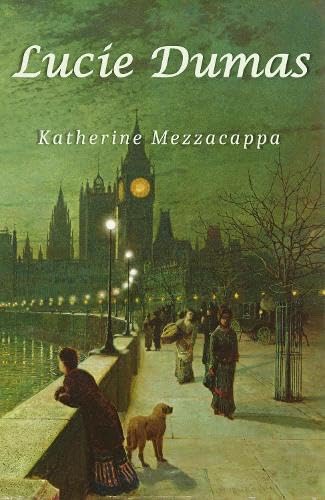
Katherine Mezzacappa: LUCIE DUMAS
London in the 1870s. Samuel Butler, the eminent Victorian man of letters, maintains a young French woman in a nearly respectable brothel in Bloomsbury. He shares her with his best friend; they each visit her once a week. Butler is a bit stingy, so Lucie has to rely on other casual trade to sustain her modest lifestyle (she has a maid!).
Lucie Dumas is a real person, mentioned in a biography of Butler. Katharine Mezzacappa has created Lucie’s autobiography. She was sent to London by a married lover in Lyon, whose child she bore. The child was taken away and is the subject of much longing, as is the flint-hearted lover. She finds a long-lost brother and bonds twice with younger prostitutes, one of whom has a terrible death from syphilis. She respects ‘Monsieur’ (as she always refers to Butler), but she does not love him.
A well-intentioned Christian ‘rescues’ Lucie to a rigidly disciplined Magdalen House, run by devout but heartless nuns (she is made a seamstress rather than a laundress). She escapes after two years to another, more downmarket brothel in Handel Street, back in Bloomsbury (I lived in Handel Street for two years in the 1960s) where a different ugly death is waiting to claim Lucie.
More courtesan than mistress, Lucie’s life is grimy – grim, even. Hers is not a bawdy tale like Fanny Hill. There is almost no explicit sex (one of her punters likes to be viciously beaten); this is social history rather than a piece of literary porn. I fear some bookshops would park it on the Misery Memoir shelf – there are resonating echoes of the original Les Miserables. Signora Mezzacappa has researched the period thoroughly, and her writing – the ‘voice’ she gives Lucie – is at the high end of biography, as it was in The Maiden of Florence, her previous exploration of one of history’s seamier corners.