From the SUSSEX EXPRESS and HASTINGS OBSERVER – this week

Newhaven author David Gee is in print with Lillian And The Italians, published by The Conrad Press, Canterbury at £9.99 paperback, £3.99 Kindle, available from Amazon and bookshops – a book about second chances.

David Gee is the pen-name of David Helsdon, aged 78. He says: “I set out to write a novel in which a widow gets a second bite of the cherry.
“Searching for her wayward son Andrew in the summer of 1966, Lillian Rutherford, a 50-year-old widow from Hastings, goes to Venice, where she meets the ex-gigolo who has shared the last four years of Andrew’s life. His revelations about Andrew’s bisexuality shock her.
“Going on to Amalfi, she meets Prince Massimo Monfalcone, whose playboy son has disappeared with Andrew.
“Massimo distracts Lillian with his life story: his first wife was murdered in a Sicilian blood-feud; his second wife killed herself because of his infidelity. As they wait for news of their sons, a bond grows between Lillian and the prince. A different world – a different life – opens up for her. Is she ready for this?
“The book will, I hope, appeal to women of all ages. Lillian learns in Venice that her son has had male as well as female lovers, so I hope this will draw in LGBT readers. Prince Massimo’s life includes 50 years of Mafia history, so maybe fans of The Godfather – and movie producers! – will be attracted.
“Lillian and the Italians is a book for women who worry that their lives will flatline after their children – or their husbands – leave home.
“I promised my mother years ago that I would write a novel in which an English widow finds romance and adventure in Italy. Lillian’s girlhood and a late-term miscarriage are taken from my mother’s life story, although she was widowed at an earlier age and fate did not bring her a Sicilian prince; Alzheimer’s took her down a different road. Lillian and the Italians is the life she should have had.
“My mother accompanied me on some of my research trips to Venice, Amalfi and Sicily. The first draft of the book was largely written on location, in cafes and bars and sitting on church steps.
“I started it in 1976 but then my job took me overseas and I didn’t finish it until the 1990s. I’ve had to overcome a surprising amount of resistance from editors and literary agents to a book with a heroine aged fifty; they prefer a book with a sexy young bimbo!
“I’ve started a follow-on novel in which Lillian’s son’s life intersects with a hotel owner from Hastings in Spain in 1968, the year of student protests in Europe and anti-war protests in the US. Hopefully it will soon be possible to fly to Spain for some location research. For now I’m relying on memories of my first visit to Benidorm in the 1960s when Benidorm had had an unfinished promenade and very little highrise – not the Benidorm we know today.”
This link will take you to the full article online:
https://www.hastingsobserver.co.uk/arts-and-culture/books/east-sussex-author-pens-the-life-he-wished-his-mother-had-led-3267700
LILLIAN’s BlogTour hits the USA


Review from Allison D:
There is a bit of mystery throughout, as her son continuously eludes her for nearly the entire tale, (not necessarily of his own doing), a Prince who Lillian develops a very comfortable bond with and then…..Italy. Beautiful, beautiful Italy and her Amalfi coast and her food, her drink, her coastline and her amazing history. Venice, and sailing and afternoon naps in the sun. The loud, loving Italians, living life to the absolute fullest.
I normally do not read men authors. And certainly not when the main character is a woman. This was written quite well, though. Gee was able to (I think) correctly capture the spirit and attitude/behaviors of a 1960’s woman, traveling to another country in search of her son. Her life has changed dramatically- she has lost her husband and in a way, her purpose. Her daughter is off in Hong Kong raising her own family, and Lillian seems a bit….restless. What does life have in store for her now?
As she spends more time in Italy, the friendship between Lillian and Prince Massimo is a bit convenient, but it is played out nicely. (No spoilers here, folks.) I want to say SO MUCH MORE about this storyline, but will simply say I liked the way it was tied up at the end.
My favorite character- by far- was Italy. This book was the PERFECT read for me this month, as I am deep into researching the Italian side of my family tree. The descriptiveness that Gee bestows on his readers is remarkable. I could taste the wine, I could feel the sun toasting me to a golden brown. I could hear the water and see the beautiful sights of Venice. If I did not want to travel to Italy before, I certainly do now!
For me, the book was a straightforward story of a mother who starts out on a journey to find her son. What she doesn’t realize is she will find out a lot more than where he has been for the past 4 years, and will find herself along the way as well.
What I’m reading: Gay porn and Barbara Cartland
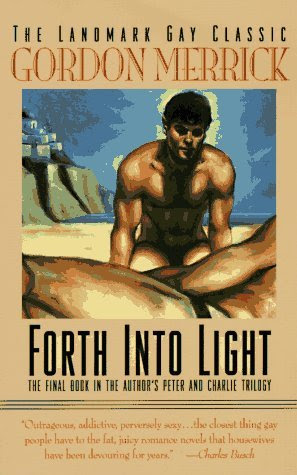
Gordon Merrick: FORTH INTO LIGHT
Originally published in 1974, this concludes the gay trilogy that began with The Lord Won’t Mind. Painter Charlie and art-dealer Peter are spending another summer in their Greek island villa with Martha, by whom they have each fathered a child. Martha is not the only woman in their life: art historian Judy arrives to consult Peter about some paintings that may be fakes. She inspires a heterosexual hiccup in Peter.
The paintings have been bought by celebrated New York author Mike who is on the island visiting his friend George, a not-so-celebrated author with a drinking problem and a rocky marriage. George’s teenage son Jeff thinks he may be gay and develops crushes on Mike and our two heroes (and one of the natives).
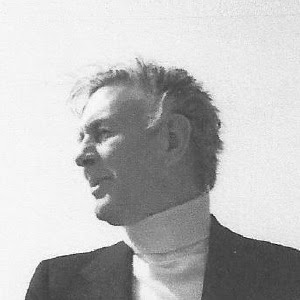 |
| Gordon Merrick |
Large dollops of sex are duly introduced as Jeff works his way through his crushes. And Peter consummates his heterosexual hiccup with Judy in scenes that veer between Barbara Cartland daintiness – “He opened his mouth, and she gave him hers” – and cinematic hardcore. Charlie is not simply well-hung; his endowment is “prodigious”. Graphic – not to say pornographic – sex is Gordon Merrick’s trademark, though I wonder if gay and straight porn belong in the same book: is there a demand for “bi-porn”?
Aside from the sex, which comes close to the “classic” turgidity of the Song of the Loon trilogy, the book consists of long – even tedious – conversations about love and fidelity. There’s a “MacGuffin” involving a missing wad of dollars which, with the extended dialogue, has echoes of one of Terence Rattigan stodgier dramas. The debate about the “openness” of many gay relationships is an interesting one, to which Merrick makes a thoughtful contribution. Forth Into Light brings his ultra-erotic trilogy to an uneven climax (if I may use that word).
What I’m streaming: The Plague before this one
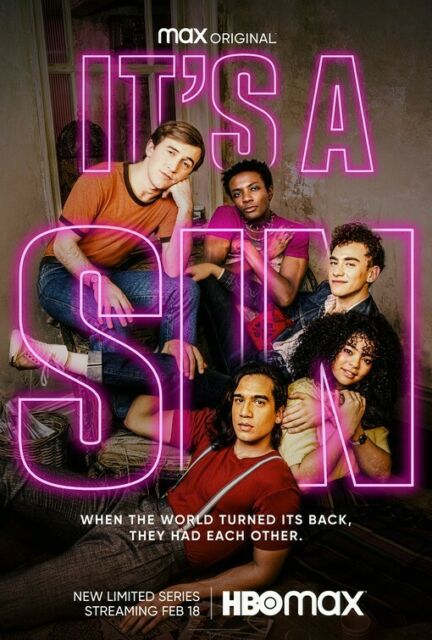
IT’S A SIN
(Channel 4/All4)
A series about the early years of the AIDS crisis would be a hard watch at any time; it’s especially tough while we’re locked down because of Covid. Written by Russell T. Davies, who gave us the taboo-breaking Queer As Folk twenty years ago, this series has a similar structure: a group of gay friends sharing their lives – and their beds – as the liberation of the 1960s and 70s turns to ashes with the arrival of HIV.
As he did in Queer As Folk, Davies spares us no detail of the rampant promiscuity that turned HIV into a pandemic. He doesn’t show us the bigotry of Evangelicals (mainly but not exclusively in the US) who saw AIDS as God’s wrath upon the citizens of Sodom, except that maybe the series’ title is nod towards the Fundamentalists.
 |
| Olly Alexander and Lydia West as Ritchie and Jill |
It’s hardly a spoiler to say that someone will die in each of the five episodes: from pneumocystis, KS lesions, CMV, cancers – the grim toll of diseases that harvested men with compromised immune systems. There was a stand-out episode in LA Law when two parents cut their son off from his lover and all his friends and took him home to die. Russell Davies revisits that storyline in the final heartbreaking part of It’s A Sin.
Many of my generation and the one behind us lost people we loved and people we liked during that terrible decade and a half. The grief of those losses will come gruellingly back to us watching this series. Ultimately, medical breakthroughs and human kindness saw us through the age of AIDS. Inshallah, they will also see us defeat Covid.
What I’m reading: the best novel of the past fifty years?

Michael Ondaatje: THE ENGLISH PATIENT
In 2018, 9,000 people voted for this as the best of the Booker Prize-winning novels in the award’s fifty years. Salman Rushdie’s Midnight’s Children had previously been hailed as the best of 25 and then 40 years.
I’m a huge admirer of Anthony Minghella’s 1996 movie of The English Patient, but I’d missed reading the novel until now. It’s only 320 pages, but I found it a tough read. Stylistically it’s very dense, skipping between present and past tenses with frequent viewpoint switches. The story is fragmentary, and it certainly helps to have seen the movie which had a more linear timeframe.
It’s 1945 and Italy has been liberated by the Allies. Hana, a young Canadian nurse, is looking after a hideously burnt man in a ruined villa in Tuscany. She is joined by a fellow Canadian, Caravaggio, who seems to be AWOL, and a Sikh bomb-disposal sapper, Kip, with whom she falls in love. The English patient (who is not actually English) tells the other three of his time before the war exploring Egyptian ruins in the Sahara and of his affair with the new young wife of one of the archaeologists’ backers.
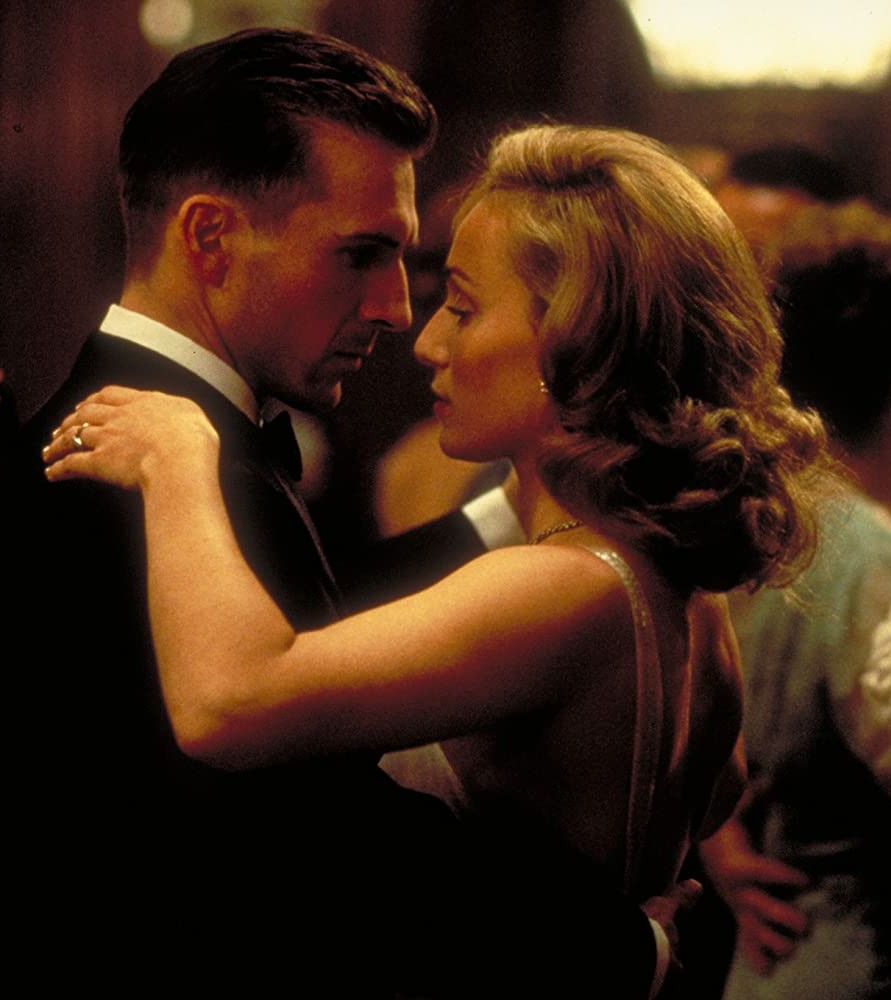 |
| Ralph Fiennes and Kristin Scott Thomas as Almasy and Katharine |
As in the movie, the relationship between Almasy and Katharine has a kind of cold intensity. Almasy’s trek across the desert to fetch medical aid for Katharine, left injured in the Cave of Swimmers after the plane crash, is epic, but I wasn’t moved by it as much as by the tenderness between the nurse and the sapper.
The desert scenes and Tuscan landscapes are as vivid on the page as in Minghella’s visual feast of a movie. A sequence when Kip defuses a bomb is very cinematic. The English Patient is clearly a masterpiece of English writing, but I could only read a few pages at a time. There’s a lyrical quality to Ondaatje’s prose which requires re-reading as you go. Occasionally I felt I was getting echoes of T.S. Eliot. The only comparable novels I can think of are Lawrence Durrell’s Alexandria Quartet, which I hugely admired in my twenties but would perhaps find a bit ‘indigestible’ today.
Wikipedia will remind you of all the Booker shortlisted novels and winners through its 50-plus years. My personal favourite, not a winner but shortlisted in 1980, is Anthony Burgess’s Earthly Powers, a deeply powerful novel on the theme of Faith and Human Frailty. And I remember reviewing Rushdie’s Shame (1983), another runner-up, as a work of “Genius”, not a word I’ve been generous with. Looking for books that have given me the most pleasure rather than mere admiration, I’m going to plump for The Carpetbaggers and The Adventurers, both by Harold Robbins, two novels from the 1960s which thrillingly explored the world of Hollywood and Jet-Set celebrity. Do I need to hide my head in embarrassment?
I’d welcome seeing your all-time favourites in the Comment Box.
What I’m reading: Gays in High Places
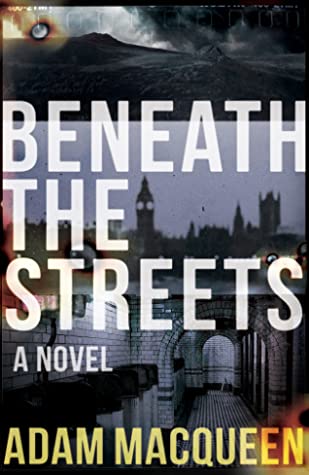
Adam MacQueen: BENEATH THE STREETS
What I’m streaming: Rock Hudson, the pioneer of gay liberation
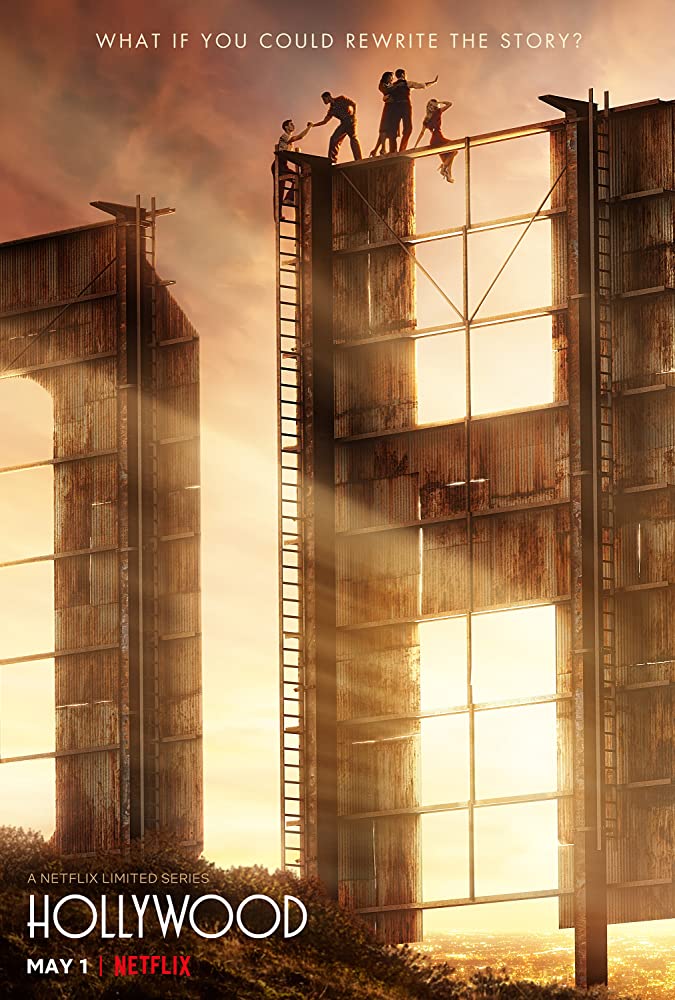
HOLLYWOOD (Netflix)
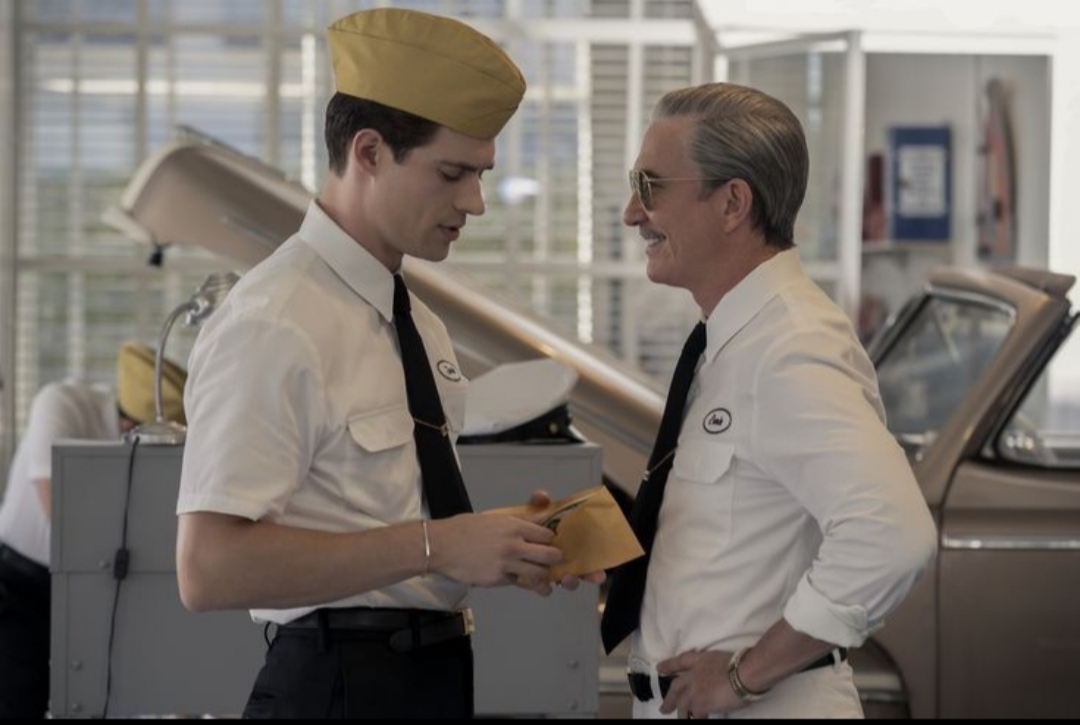 |
| David Corenswet and Dylan McDermott, a gigolo and his pimp |
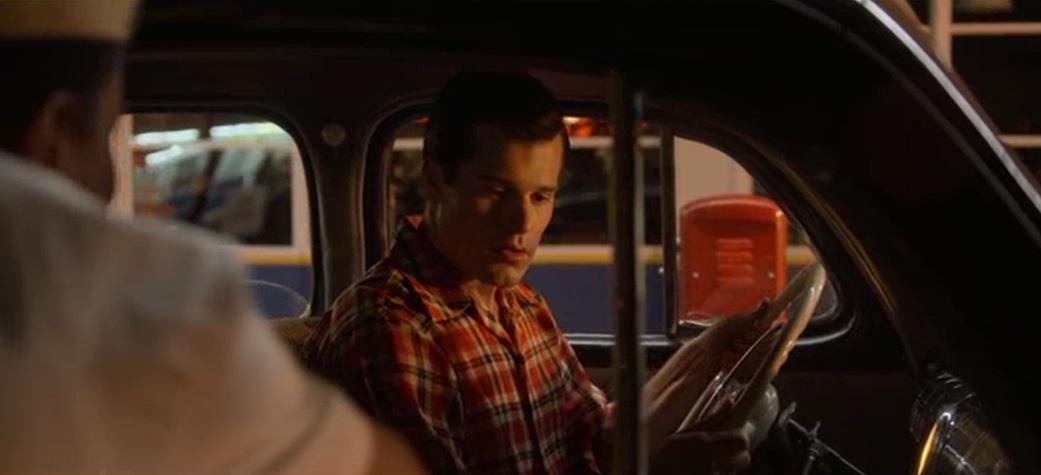 |
| Jack Picking as Rock Hudson: “Fill it up, and while you’re about it …” |
 |
| The real Peg, who jumped off the big H in 1932 |
What I’m reading: Love in the shadow of the gas chambers
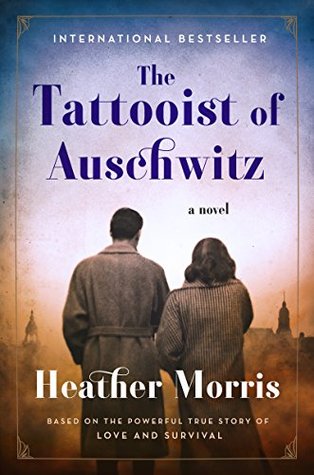
Heather Morris: THE TATTOOIST OF AUSCHWITZ
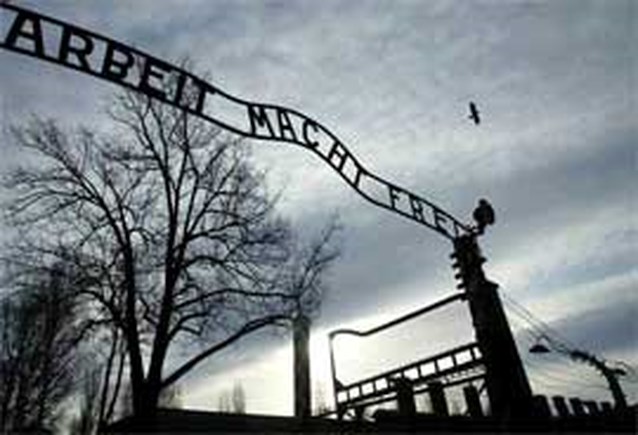 |
| ‘Work will set you free.’ The great Nazi lie. |
What I’m reading: a timeless classic of Love and War (but not Peace)
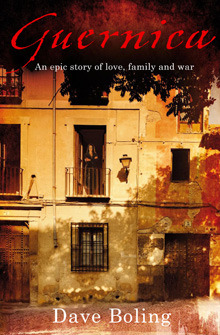
Dave Boling: GUERNICA
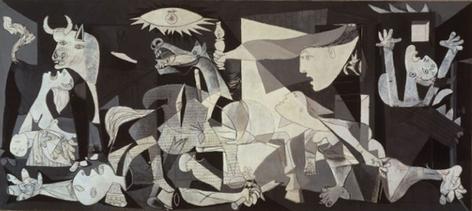 |
| Picasso’s GUERNICA |
Wow! I’m on a Novel Prize “longlist”

That’s a NOVEL prize – not the NOBEL Prize!
LILLIAN AND THE ITALIANS is on the “longlist” (22 out of 77 entries) for the Retreat West Novel Prize.
Extracts from Lillian and the Italians can be found on www.davidgeebooks.com